Thy kingdom come. Thy will be done in earth, as it is in heaven.
Matthew 6:10 (KJV)
Two requests that look upward before the prayer looks down at bread.
EU•AN•GE•LION (YOO-AN-GEL-EE-ON) · εὐαγγέλιον — Good News
EUANGELION is a product of WokeGod LLC. Copyright © 2026 WokeGod LLC. All rights reserved.v0.8.39TermsPrivacyCookie PolicyCommunity GuidelinesContent Disclaimer
EU•AN•GE•LION (YOO-AN-GEL-EE-ON) · εὐαγγέλιον — Good News
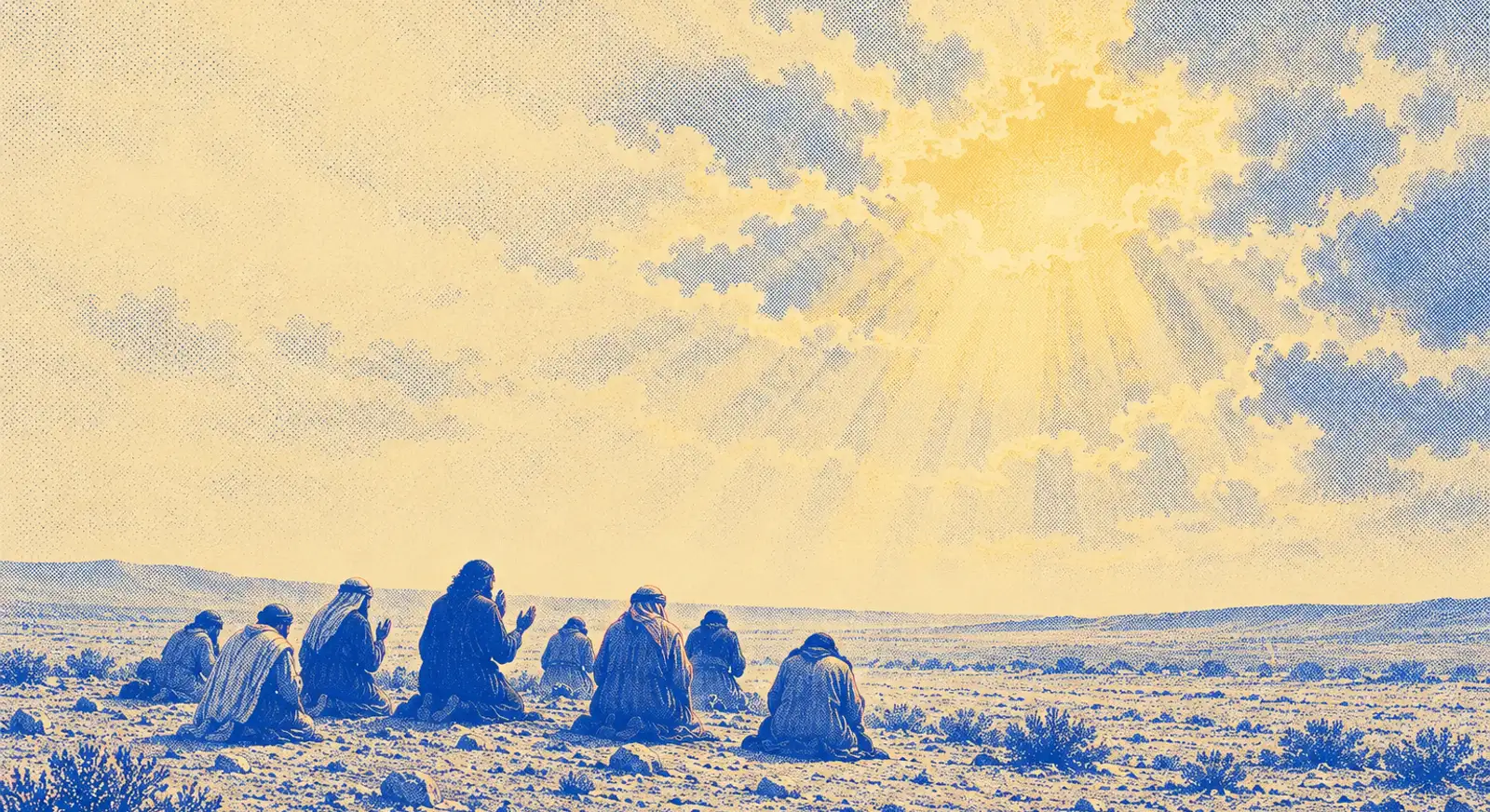
Three petitions look up and four look down. The middle one, the will, is where the prayer turns. Today we find out why the Garden is the place to read it.
Matthew 6:10; Isaiah 55:8–9; Matthew 26:39–42
Title
Thy kingdom come. Thy will be done in earth, as it is in heaven.
Matthew 6:10 (KJV)
Two requests that look upward before the prayer looks down at bread.
The prayer turns here. The first three petitions look upward: the name, the kingdom, the will. The last four look down at what we need: bread, forgiveness, protection, rescue. The third request, ‘Thy will be done in earth, as it is in heaven,’ is where the prayer turns from God to us.
The structure is easy to miss in a quick reading, but it is clear in the Greek. The first three requests are imperatives. Let your name be hallowed. Let your kingdom come. Let your will be done. Then the prayer moves into the second person plural, our bread, our debts, our temptation, and the grammar follows the shift. The petitioner has been asking for God’s honor, and now asks God to take care of the people who honor him.
It is a mistake to read the prayer as if the requests were shopping items on a list. The order carries a teaching. What we need is placed inside a larger prayer that God’s will be done. Our needs are real, and they are also under his authority.
The English translations in our corpus differ at Luke 11:2. The King James Version includes the petition ‘Thy will be done, as in heaven, so in earth.’ The Berean Standard Bible prints the first lines of Luke 11:2 without it. This reading does not build on that difference. It notes that the petition for God’s will stands in Matthew 6:10 in both translations, and that is the text this reading follows.
REFLECT
When you pray for God’s will, which part of your life do you most quietly exempt from the request?
A Two-Minute Prayer
Your kingdom come and your will be done, here as in heaven. I give you the part of my life I have kept back. Amen.
IN YOUR OWN WORDS
For my thoughts are not your thoughts, neither are your ways my ways, saith the Lord. For as the heavens are higher than the earth, so are my ways higher than your ways, and my thoughts than your thoughts.
Isaiah 55:8-9 (KJV)
God’s purposes are not built from our measurements, and the prophet says so plainly.
The prophet Isaiah wrote to people who were tired of waiting. The promises they had heard seemed far away, and the situation they lived in did not look like the promises. God answers with a comparison that is easy to read and hard to live with. His thoughts are not our thoughts. His ways are higher than our ways, as high as the heavens are above the earth.
Isaiah places our plans within a wider view: God sees beyond what we can see. When we pray that his will be done, we are admitting that we do not know the whole shape of the thing we are asking about.
This is a humbling admission, but it is also a freeing one. You do not have to understand everything before you can ask for it to come. You only have to be willing to be surprised by the answer.
Isaiah does not ask his readers to produce the answer first. He asks them to listen to the one whose answer it is. The same prophet compares God’s word to rain and snow that water the earth: ‘So shall my word be that goeth forth out of my mouth: it shall not return unto me void, but it shall accomplish that which I please’ (Isaiah 55:11, KJV). The word does its work without needing our measurements, and the prayer lives in that confidence.
This matters for anyone whose prayer for God’s will feels like it is going nowhere. The prophet’s picture is a patient one. Rain does not argue with the field. It soaks in, and in time the field bears seed. The petition for God’s will is that kind of prayer: it works in the ground before anyone sees the harvest.
Bless the Lord, ye his angels, that excel in strength, that do his commandments, hearkening unto the voice of his word. Bless ye the Lord, all ye his hosts; ye ministers of his, that do his pleasure.
Psalm 103:20–21 (KJV) (KJV)
The psalm already describes a created order in which the will is done without argument.
The Greek of the petition is ὡς ἐν οὐρανῷ καὶ ἐπὶ τῆς γῆς (hōs en ouranō kai epi tēs gēs), ‘as in heaven and on earth.’ The comparison matters. The prayer asks for what already happens in the heavenly realm to happen in the earthly one.
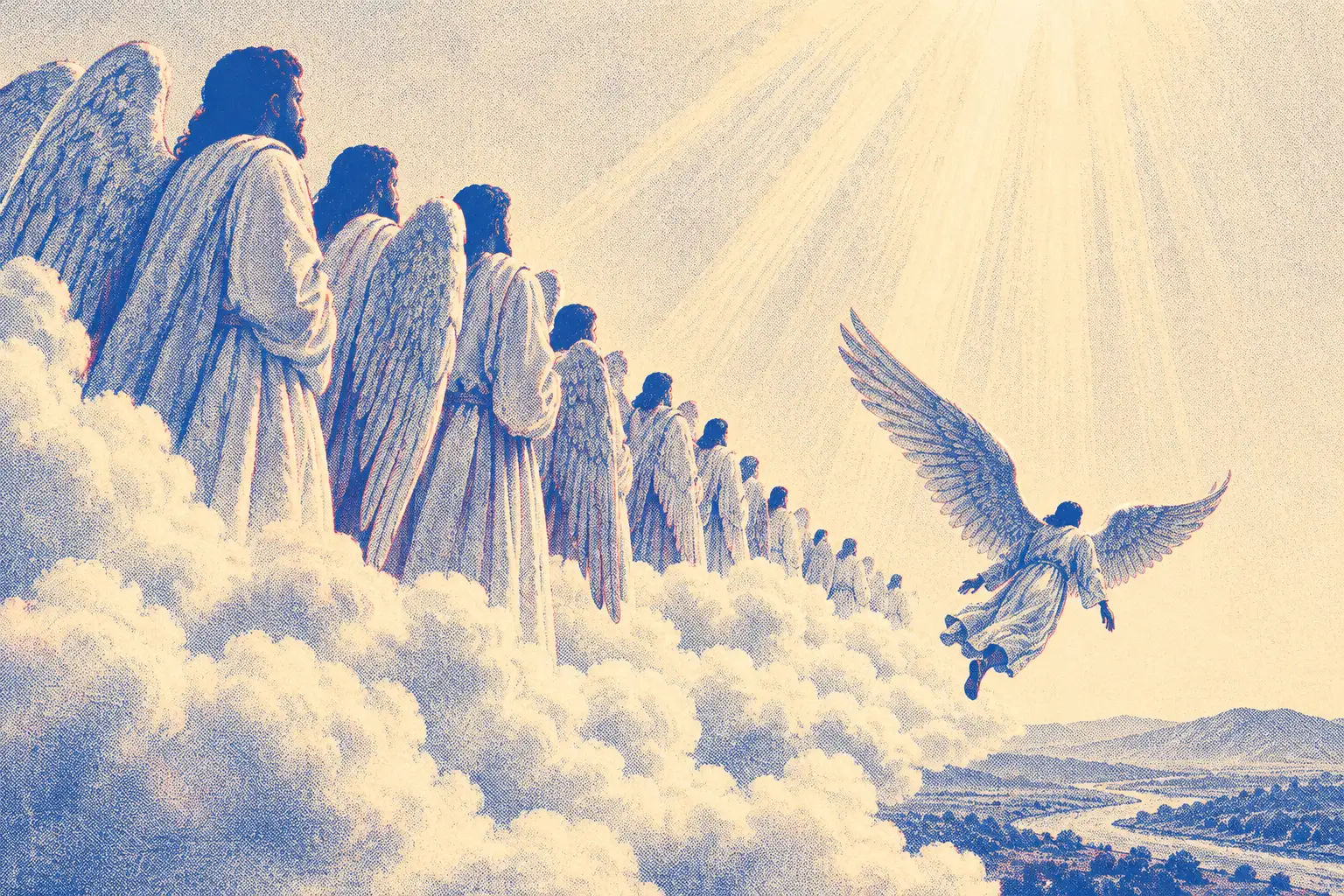
The Psalms describe that heavenly realm. The angels ‘do his commandments, hearkening unto the voice of his word.’ They ‘do his pleasure.’ The psalmist is not describing a mechanical world where nothing can be refused. He is describing a court where the word is heard and the will is done, and the people who serve in it are glad to do so.
So the prayer asks for something specific. It asks that the earth be a place where God’s purpose is done as readily as it is done in the heavens. The petition asks for human hearts and communities to turn toward God’s will, so the earth reflects the good order already asked for in heaven.
The will is often heard as a demand. The prayer hears it as a pattern to be copied, and it puts the request in the mouth of people who are learning the pattern. That is why the petition is a prayer for ourselves as much as for the world.
Many of us ask for God’s will in general and resist it in particular. The pattern of the prayer runs the other way round: say the general petition, then name the particular place where the will is hard, and let the petition apply there. The prayer does not ask us to be comfortable with God’s will before we pray. It asks us to pray it where it costs something.
Where the Will of God Sits in the Story
ANCIENT TRUTH
Israel’s hope for a king was a hope that God’s rule would be visible in the world. The prophets spoke of a kingdom where justice would reach the whole land, and the people’s prayers were shaped by the longing for that reign to come.
This is the KINGDOM stretch of God’s story. The kingdom is being announced and its king is teaching the people how to ask for it to come.
MODERN APPLICATION
The desire for one’s life to make sense is common. Many people want to know what God wants without being asked to give up their own plans. The petition asks for the second thing before the first, and it trusts that the answer will be good even when it is not what was expected.
NEW TESTAMENT ECHO
Romans 12:2 asks believers to be transformed so that they may prove ‘what is that good, and acceptable, and perfect, will of God.’ The petition for God’s will is a request for that transformation.
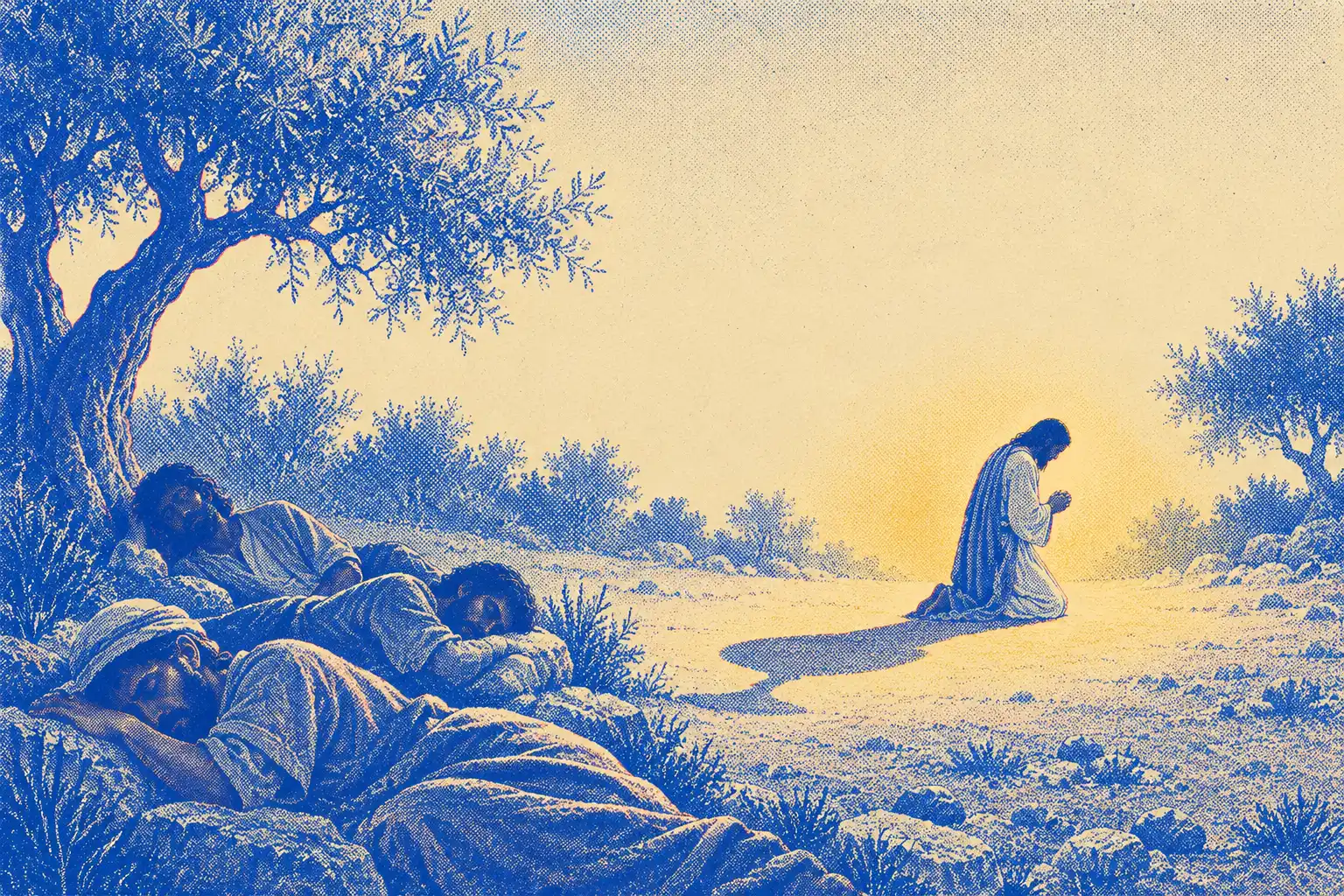
And he went a little further, and fell on his face, and prayed, saying, O my Father, if it be possible, let this cup pass from me: nevertheless not as I will, but as thou wilt. And he cometh unto the disciples, and findeth them asleep, and saith unto Peter, What, could ye not watch with me one hour? Watch and pray, that ye enter not into temptation: the spirit indeed is willing, but the flesh is weak. He went away again the second time, and prayed, saying, O my Father, if this cup may not pass away from me, except I drink it, thy will be done.
Matthew 26:39–42 (KJV) (KJV)
The request from the Lord’s Prayer comes back in the Garden, prayed by the one who taught it.
The night before the cross, Jesus went to a garden and prayed. He asked that the cup be taken from him if it were possible. Then he added the words that the disciples would later remember: ‘not as I will, but as thou wilt.’ On the second time he prayed, he said that if the cup could not pass without his drinking it, then ‘thy will be done.’
The prayer that Jesus taught the disciples and the prayer he prayed in the garden share a petition. The will of the Father is asked for, and it is asked for by the Son, who is about to carry out the thing the will required. The disciples had heard him teach this petition in the hillside sermon. Now they watch him pray it for himself.
This is the sod, the deeper layer, that the reading keeps coming back to. The Son entered the Father’s will in the place where the petition is most costly. The petition does not ask the disciple to accept something that the teacher would not accept. It asks the disciple to pray with the teacher.
John’s Gospel records Jesus saying that his food is ‘to do the will of him that sent me, and to finish his work.’ Doing the Father’s will shaped Jesus’ life. Matthew records him saying that the one who does the will of the Father is his brother, sister, and mother. The petition makes the same offer to anyone who prays it. It is an invitation into a family whose life is shaped by a will that is good.
The letter to the Hebrews later puts the words ‘Lo, I come… to do thy will, O God’ into the mouth of the one who came into the world (Hebrews 10:7, KJV). The petition the disciples learned is the same petition the Son lived out. Jesus did not only teach the petition. He lived its hardest version, and a reader who wants to know what it costs to pray ‘thy will be done’ can find the answer in the garden as well as in the sermon.
The garden also shows what the petition does not mean. In the Garden, Jesus asked to be spared the cup and then placed his desire before the Father. Luke describes the distress with which he prayed. Prayer that says ‘thy will be done’ does not pretend the other desire is gone. It places both desires in front of the Father and lets the will be the one that stands.
What would change if you prayed the third petition in the garden’s company? You would not be asking for an easy path. You would be asking for the willingness to walk the path that is given, and trusting that the one who gave it knows where it leads.
Most people who pray this petition never see its full result. It is a daily practice, and its fruit shows up in small faithfulness repeated across years. That is enough for a reading. It is the way the petition is built: one prayer, many days, and God’s will coming a little further into each one.
Matthew’s account holds both parts of the prayer together. Jesus asks for the cup to pass, keeping his human desire in view, and then entrusts himself to the Father’s will. The disciples hear a prayer that names the cost before it names obedience. When they receive the words “Thy will be done,” they know this petition can be prayed by someone who feels fear and still trusts the Father. That context keeps the request from sounding like indifference to suffering.
Maria: A Composite Case
Maria’s composite story follows the petition through an ordinary decision. A woman we will call Maria had planned her career with care. She was offered a role in a city she had never lived in, and the role would have paid well and fit her skills. Every part of her plan said yes. Her prayers for the decision were full of requests that the plan would work.
One evening she tried the third petition. She did not ask God to change her mind. She said the words slowly and noticed that the plan was in front of the will, not the other way around. She wrote down three things she wanted, and then wrote a sentence beside each one: ‘Your will be done here, as in heaven.’
She did not take the job. She also did not feel certain about her decision. What changed was her sense of the decision’s weight. It was no longer a verdict on whether God loved her. It was a choice made in a conversation with a Father whose will was good, and she was allowed to hold her plans loosely while she made it.
She did not know, at the end of that week, whether she had chosen well. She knew she had prayed the petition honestly, and that the honest prayer had changed how she carried the decision. She has since said the petition did not make the choice easier. It made her less afraid of what the choice might say about her.
The prayer asks for a will to be done on the earth the way it is already done in heaven, and it asks us to be the place where that happens.
The petition can sound abstract until you try to live it. Across the New Testament, the Father’s will is described through action: the one who hears and does the Father’s will. Matthew 7:21 says that not everyone who calls Jesus ‘Lord, Lord’ will enter the kingdom, but the one who does the will of the Father will. The petition and the action belong together.
The Christian life takes shape in ordinary choices. It shows up in how you treat a coworker who is difficult, in whether you tell the truth about a deadline, in whether you keep a promise when a better offer comes. These choices do not feel like the kingdom coming. Most of them feel small. The petition asks God to make them the place where his will is done.
The will also shows up in what you refuse to do. Some decisions are closed to the one who prays this petition, and the closing is part of the answer. You may find that the prayer changes what you want, not only what you ask for.
There is a practical test. Before a decision this week, say the petition once and then name the first option you would choose. Then ask whether you can hold it open to God’s will. You do not need to pretend the first option is wrong. You need to be willing for it to be replaced if the Father’s will is different.
Jesus’ examples keep this petition from becoming an inward test only the person praying can judge. He connects the Father’s will with hearing and doing, receiving others as family, and finishing the work he was given. Paul asks the Roman church to let its life be changed so the community can discern what is good. Across those passages, the will becomes visible in acts that serve, tell the truth, keep promises, and welcome neighbours. A reader facing a choice can ask what the next faithful act is, then bring that answer to the Father. The decision may still carry risk. This prayer does not make the outcome visible in advance. It places the person who chooses inside a community learning the same obedience.
That distinction matters when people disagree about the right choice. The petition does not make every instinct a message from God, or let one confident person speak for God without listening. Scripture, wise counsel, attention to the neighbour, and an honest look at our motives all shape discernment. These ordinary means help the church listen for the Father’s will together. The prayer continues to ask that what is good be done on earth, where our choices touch the lives of others.
REFLECT
Which decision in front of you would be hardest to hand over with the words ‘Your will be done’?
A Practice for Today
Stand with both hands open at your sides, palms forward. Say the petition slowly. Then turn your hands palms down, as if setting something on a table. Say it again. Repeat three times, and notice the difference between the two postures.
Open
Palms up while you say ‘Your will be done.’ Let the hands receive.
Set down
Palms down while you say ‘as it is in heaven.’ Let the hands release.
Pause
Stand still for three breaths before you speak again.
Return to the petition when one decision asks for your trust. Praying for God’s will asks you to trust the one who knows the whole shape of things, even when his leading differs from your plans. Ask him to shape your next step.
You can say this petition without knowing what the answer will look like. Isaiah’s words invite trust in God’s higher ways. The one whose will is asked for is the one who gave the Son to the cross and raised him from it.
The prayer has turned your eyes upward first. The bread you will ask for next belongs in the company of a Father who has a will and a purpose for it.
Prayer
Father, your thoughts are higher than mine, and your will is good. I ask that it be done here, in my home and my work and the places I would rather keep to myself. Make my heart willing as the heavens are willing. Let my plans be open in your hands. Amen.
BREATH PRAYER
Your will be done — as it is in heaven
IN YOUR OWN WORDS
Today's Commitment
Before one decision this week, I will pray ‘Your will be done’ and name the option I would choose. Then I will hold it open to God.
LEAVING AT THE CROSS
RECEIVING FROM THE CROSS
One Question
In Matthew 6:10, what is the comparison the petition makes?
Sources & Further Study
Greek of Matthew 6:10
ἐλθέτω (elthetō), γενηθήτω (genēthētō), and θέλημα (thelēma) are verified at the Matthew 6 interlinear on Bible Hub (biblehub.com/interlinear), Strong’s G2064, G1096, and G2307. The phrase ὡς ἐν οὐρανῷ καὶ ἐπὶ γῆς is verified in the same text.
RELATED SCRIPTURES
Matthew 26:39–42 (KJV)
The petition prayed in the Garden by the one who taught it.
John 4:34 (KJV)
My meat is to do the will of him that sent me, and to finish his work.
Matthew 7:21 (KJV)
Not everyone who says Lord, Lord, but the one who does the will of the Father.
REFLECT
What is the one plan you would be willing to hold open to God’s will this week?
Finished reading? Mark this day read.
BEFORE YOU GO
Anything you want to keep from today?
EUANGELION is a product of WokeGod LLC. Copyright © 2026 WokeGod LLC. All rights reserved.v0.8.39TermsPrivacyCookie PolicyCommunity GuidelinesContent Disclaimer