HOW TO READ · 2026-09-13
The day's guides
Practice
Let the Calendar Choose the Passage
For centuries, most Christians didn't decide what to read each morning — the date decided for them.
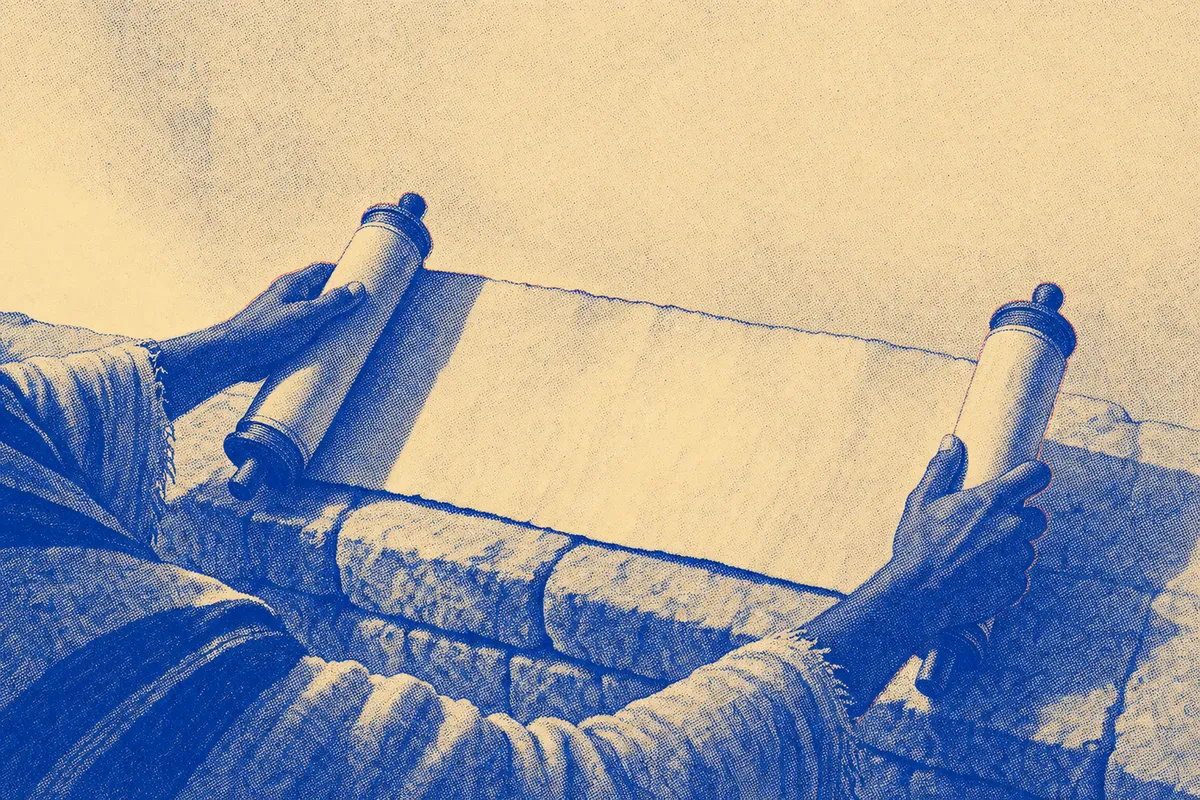
Most reading plans ask you to choose: pick a book, pick a pace, pick a translation. A lectionary removes the choosing. It's a fixed cycle of readings — usually a psalm, an Old Testament passage, and a New Testament passage — assigned to each day of the year, repeating on a set schedule (the Revised Common Lectionary runs on a three-year cycle). You don't decide what to read. The calendar already has.
This sounds like a small thing, but it changes the experience of reading. Left alone, most people read what they already like — the Gospels, a few Psalms, Romans. A lectionary hands you Habakkuk in January and Leviticus in June whether you'd have chosen them or not. You end up reading more of the Bible than you would on your own, simply because nobody asked your opinion.
It also ties your reading to the church calendar, which most personal plans ignore entirely. During Advent you're reading texts about waiting and promise. During Lent, texts about testing and repentance. During Easter season, resurrection appearances. The passage in front of you isn't isolated — it's part of a larger rhythm that Christians have kept for well over a thousand years, and that rhythm is doing some of the interpretive work for you before you've read a word.
You don't need to belong to a liturgical church to use one. Lectionaries are printed in full online, and several Bible apps offer a 'daily lectionary' plan alongside their other reading plans. Pick one, bookmark it, and check it the way you'd check a weather report — a fixed, external thing you consult rather than curate.
The discomfort is the point. You will hit stretches that feel repetitive or oddly juxtaposed — a triumphant psalm paired with a grim prophetic warning. Don't smooth it over. Sit with the pairing for a minute before deciding what to make of it. Often the lectionary's editors put two texts side by side on purpose, and the friction between them is where the reading gets interesting.
This isn't a replacement for reading a book straight through when you want to understand its argument. It's a different discipline entirely: showing up to whatever the day gives you, the way you'd show up to a scheduled meeting you didn't set the agenda for. Over a year, it adds up to something you couldn't have planned as well yourself.
- Find a daily lectionary (Revised Common Lectionary, or a Catholic/Anglican daily missal)
- Look up today's date, not your place in a book
- Read the assigned passage even if it seems random or repetitive
- Notice which season you're in — Advent, Lent, Ordinary Time — and let it color the reading
- Resist the urge to swap it for something you'd rather read
5 MIN
Method
A Word That Runs From Genesis to Revelation
Some words don't stay in one book — they travel the whole length of the Bible and pick up meaning as they go.
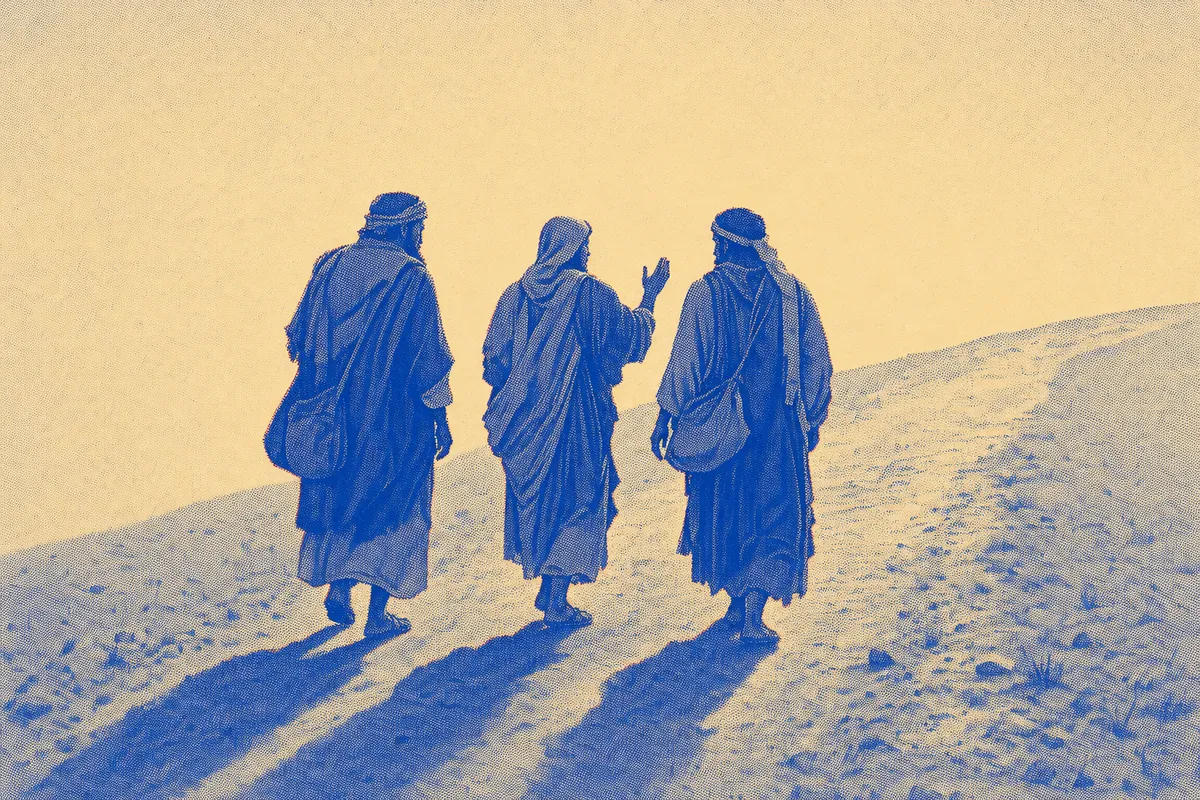
Pick a word like 'bread' and follow it from Genesis to Revelation, and you're not doing a word study in the usual sense — you're not checking a Greek dictionary entry. You're tracing an image as it moves through eleven hundred pages, changing hands and meanings as different writers pick it up.
Bread starts as sweat-labor in Genesis 3 — 'by the sweat of your face you shall eat bread.' It becomes miracle in Exodus, falling from the sky as manna nobody can hoard. It becomes offering in Leviticus, laid out on a table in the tabernacle. Centuries later it becomes metaphor in John 6, where a man calls himself the bread of life to a crowd that just watched him multiply loaves. And it becomes ritual in the upper room, broken and handed around a table one last time. Same word, five very different jobs.
The method is simple but easy to do badly. The mistake is collecting verses like specimens — a list of every place 'bread' shows up, with no sense of order. Do it in canonical order instead, first appearance to last, and read each one in its paragraph, not in isolation. A verse pulled out and set next to nine others starts to look like proof of something. Left in its place, it's just one writer, at one moment, reaching for an image that already had history behind it.
Good words for this: bread, water, garden, blood, lamb, shepherd, exile, rest, name. Avoid abstractions like 'love' or 'faith' at first — they're everywhere, which makes them hard to trace, and the sheer volume tempts you to skim rather than read. A concrete noun keeps the exercise honest, because you can actually picture the thing in each scene.
When you're done, write the arc in three or four sentences — not a doctrine, just a shape. 'Bread starts as labor, becomes gift, becomes ritual, becomes the thing itself.' That sentence is worth more than a list of forty cross-references, because it's something you can carry into the next passage you read, wherever a loaf shows up next.
This works because the biblical writers were doing it on purpose. They knew their scriptures the way musicians know a standard — and when John has Jesus say 'I am the bread of life,' he's not coining a metaphor from nothing. He's picking up an image that had already been handled by a dozen writers before him, and counting on you to remember what they did with it.
Getting started
Start With a Gospel, Not Genesis
Reading the Bible in the order it's printed is the most common reason people stop reading it at all.

The Bible is printed Genesis to Revelation, and most people assume that's the order to read it in — the way you'd read a novel from page one. It isn't. It's the order the books were collected in, roughly by category, not the order that makes sense for someone meeting this material for the first time.
Start there and the pattern is predictable. Genesis is gripping. Exodus holds for a while. Then Leviticus arrives — priestly law, sacrificial procedure, none of it narrated, all of it demanding context you don't have yet — and most first-time readers quietly stop. Not because the material is unimportant, but because it's the wrong material to meet on day one.
Start with a Gospel instead. Mark is short and moves fast — you can read the whole thing in an afternoon and come away with a clear sense of who Jesus is and how he talks. Luke is longer but more explanatory, written for someone who needs things spelled out. Either one gives you the center of the story before you go looking for its edges.
From there, a few Psalms — not all hundred and fifty, just five or six that read like prayer rather than liturgy (Psalm 23, 27, 34, 103 are good places to land). They're short, they're personal, and they teach you that the Bible isn't only narrative and law — it's also someone talking to God, which is a register worth hearing early.
Only then go back to Genesis and Exodus, and even there, read selectively at first. The narrative chapters — Abraham, Joseph, the plagues, the exodus itself — carry the story. The legal and genealogical chapters can wait; they'll make more sense once you already know the people and the promises they're attached to.
This isn't a claim that Leviticus or Numbers don't matter — they matter enormously, and there's a place for reading them closely once you have the rest of the story to hang them on. It's a claim about sequence: meet the person before you study the paperwork. Most reading plans that fail do so because they front-load the paperwork.
If you want a plan rather than assembling your own, look for one explicitly built for new readers — often labeled 'chronological' or 'story' plans. They reorder the material by narrative logic instead of table-of-contents order, which is exactly the adjustment a first-time reader needs.
- Begin with the Gospel of Mark or Luke, not Genesis 1
Back to today's paper →