HOW TO READ · 2026-09-05
The day's guides
Method
The Complaint Comes First
The Psalms were written by people who yelled at God and kept the transcript.
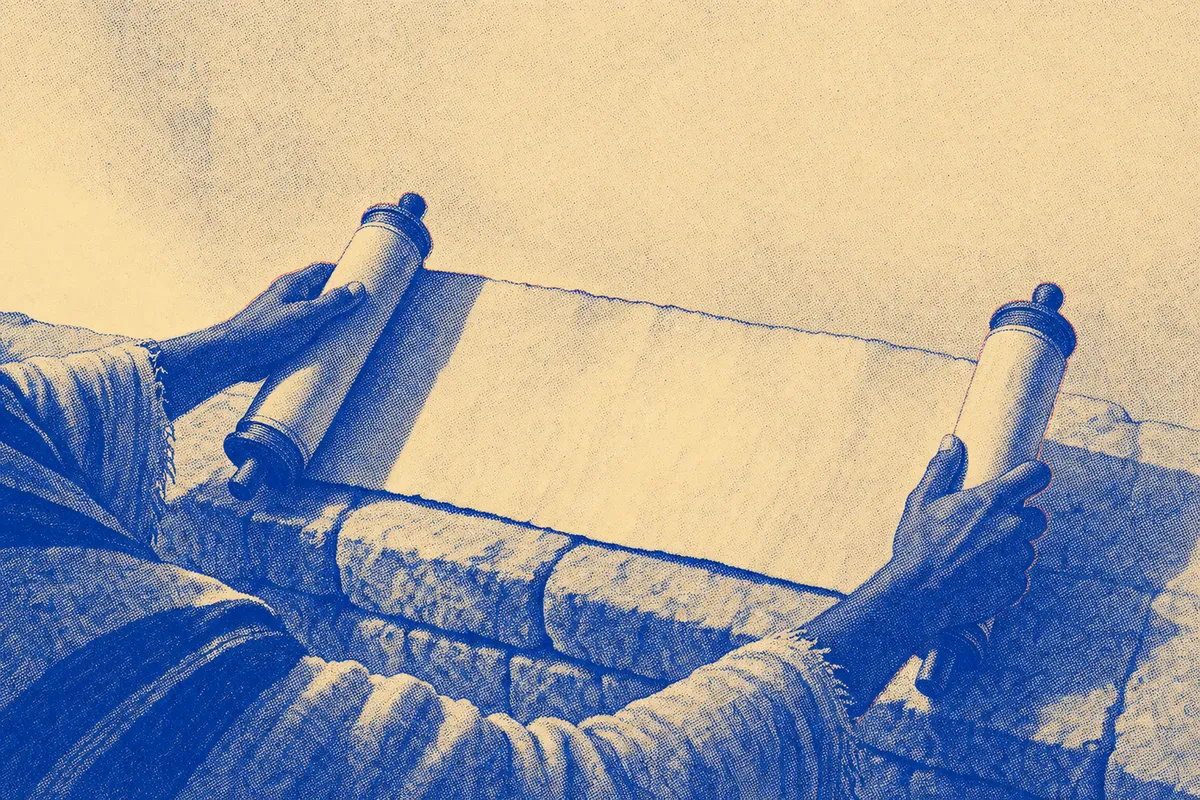
Most people assume the Psalms are where you go once you've already calmed down. Read a handful of the laments and you'll find the opposite is true. They're where people went while they were still furious, still frightened, still convinced God had forgotten them — and they said so, in writing, out loud, in the assembly.
A lament psalm has a shape, and once you know it, you can see it working underneath almost every one. It opens with an address — a name for God, sometimes bare and desperate: 'My God, my God.' Then comes the complaint, unfiltered: how long, why have you hidden, why do the wicked prosper. Then a request, specific and unashamed: rescue me, answer me, don't let my enemy say he beat me. Often, though not always, there's a turn — a remembered rescue, a decision to trust anyway — followed by a vow to praise once the answer comes.
That turn is the part people quote. It's rarer than you'd think. Read Psalm 88 start to finish and you'll notice something the lectionary usually skips past: it ends in darkness. No pivot, no vow, no light. The last word in Hebrew is close to 'darkness' itself. It's still scripture. It was still sung in the temple. Someone decided that a prayer with no resolution belonged in the book God's people pray from.
That matters if you've ever sat down to pray and had nothing but complaint to offer. The psalms don't ask you to arrive with your trust already assembled. They give you a form sturdy enough to hold the complaint on its own, and trust that if it comes, it comes on its own schedule.
Try writing one. Not a poem — a psalm, in the old shape. Name who you're talking to. Say what's wrong, specifically, without softening it for God's benefit. Ask for what you actually want. If a reason to trust shows up while you're writing, let it show up; if it doesn't, stop where Psalm 88 stops. You're not failing the form. You're using it exactly as it was built to be used.
- Open to Psalm 13, 22, 42, or 88
- Read the whole psalm aloud in one breath
- Mark the line where the tone changes
- Write your own version using the same shape
- Read Psalm 88 anyway, even though it never turns
8 MIN
Getting started
Revelation Isn't a Puzzle to Solve
The code for the images is usually sitting in the very next verse.
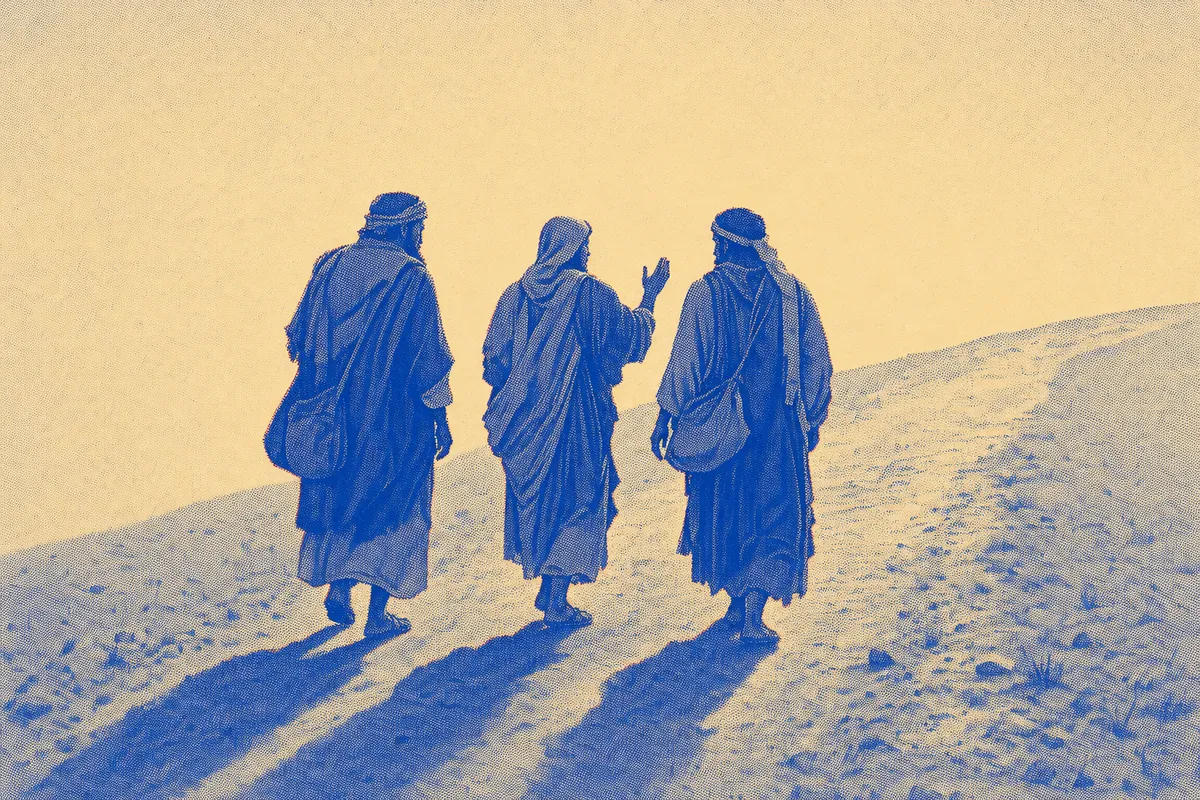
Apocalyptic writing has a bad reputation because it gets used badly — as a code to crack, a set of clues pointing at whoever's currently in the news. That approach fails for a simple reason: apocalyptic literature usually explains itself. It's one of the only genres in the Bible that regularly stops mid-vision to tell you what the vision means.
Daniel 7 is the clearest place to see this. Daniel sees four terrifying beasts rise from the sea. Instead of leaving you to guess, the text gives him an interpreter: 'these four great beasts are four kings.' The strangeness isn't a lock you need a key for — the key is built into the passage. Revelation works the same way more often than it gets credit for: 'the seven heads are seven mountains,' 'the great dragon is that ancient serpent.' Read past the image to the explanation before you go looking for one of your own.
The numbers work differently than they do in a history book. Seven is completeness. Three and a half — half of seven — is trouble cut short, incomplete by design. A thousand is more than you can count, not a figure to plug into a countdown. These were common currency in the ancient world; a first-century reader wouldn't have reached for a calendar any sooner than you'd read 'a thousand apologies' as a literal tally.
It helps enormously to read the whole book once, start to finish, before you stop to work on any single image. Revelation was written to be read aloud in one sitting to a persecuted congregation — that's stated outright in chapter one. Its first readers weren't decoding; they were being told, in the boldest images available, that the empire crushing them did not have the last word. Losing that shape by parking on chapter 13 for a month is like judging a symphony by one bar.
Last, apocalyptic writers borrow from each other constantly. The beasts, the throne room, the scroll, the measuring rod — most of it is drawn from Ezekiel, Daniel, and Isaiah. When an image in Revelation stumps you, the fastest path to an answer usually isn't a prophecy chart. It's the concordance, and the older vision the image is quoting.
- Start with Daniel 7, not Revelation 13
- Look for the angel or voice that explains the vision
- Read numbers as symbols, not a calendar
Tools
Put the Verse in the Middle of the Page
One sentence, a blank page, and an hour is a legitimate way to study the Bible.

There's a method worth knowing for the days you don't want to read a chapter — you want to sit with one sentence and actually understand it. Take a blank page. Copy the verse, by hand, in the center. Then work outward.
Circle every word you couldn't define under pressure. Not the obviously hard ones — the ones you've read so many times you've stopped seeing them. 'Righteousness.' 'Redeem.' 'Grace.' Look each one up in a dictionary at the back of a study Bible or a basic word-study tool, and write the definition next to the circle. You'll usually find the word means something more specific, and stranger, than the vague warmth you'd assigned it.
Then find the cross-references your own Bible already gives you — most print and app editions list two or three per verse in small type at the margin or bottom of the page. Draw a line from your verse out to each one, and jot a phrase for how it echoes or complicates what you just read. This is the whole method: you're not importing outside material, you're following threads the editors already laid for you.
Once the page is full of lines and definitions, write the verse again at the bottom — not the translation, your own plain-language version, as if you were explaining it to someone who'd never heard it. This step catches what you actually understood versus what you'd only ever recited.
Finish with one sentence: what would be different this week if this were simply true. Not an application project — one honest sentence.
The whole thing takes less time than it sounds like, and it needs nothing you don't already own: a Bible with cross-references in the margin, a pen, and a page you're willing to make messy. It won't replace reading whole books. It's for the verse that's been sitting unexamined in a sermon note or a memory for years, waiting for you to actually look at it instead of past it.
- Copy one verse by hand, centered on a blank page
- Circle any word you can't fully define and look it up
- Draw lines out to two or three cross-references
- Rewrite the verse below in your own words
- Write one sentence about what changes if you believe it
Back to today's paper →